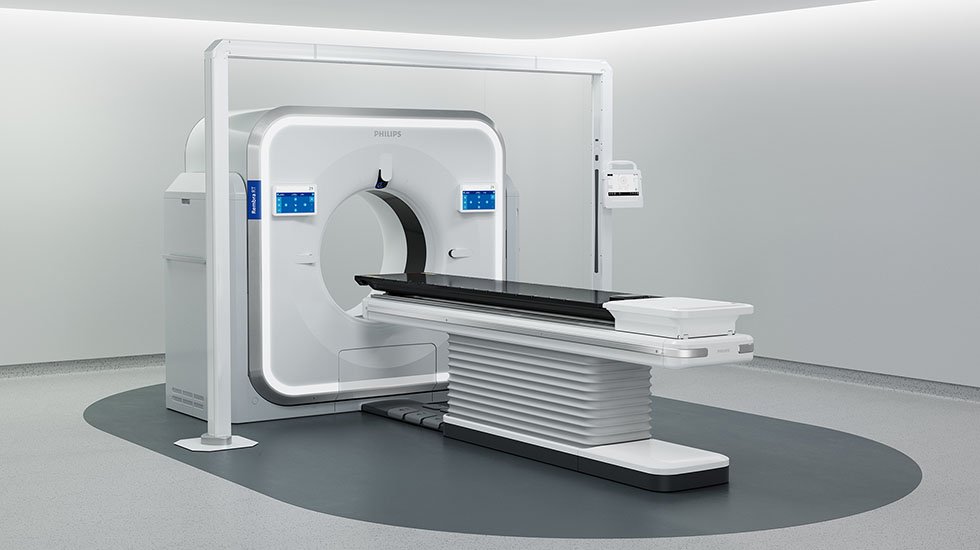
Complete review of the Philips Rembra CT platform 2026. FDA cleared Rembra CT Rembra RT and Areta RT specs features 4DCT imaging radiation therapy planning and what it means for healthcare in 2026.
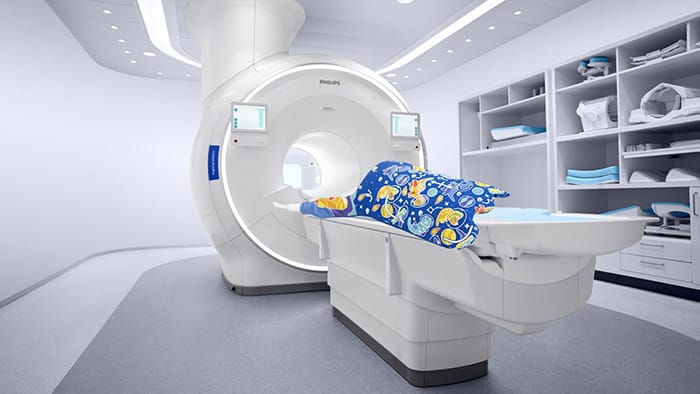 Philips Rembra RT FDA cleared in April 2026 for high-fidelity radiation therapy planning and precision cancer care
Healthcare systems around the world are under more pressure than ever before. Patient volumes are rising. Clinical complexity is increasing. Workforce shortages are pushing imaging departments to their limits every single day. In this environment the tools clinicians rely on need to be faster smarter and more connected than anything that came before them.
On April 22 2026 Royal Philips received FDA 510k clearance for its Rembra platform three connected CT systems designed to fundamentally change what is possible in both diagnostic radiology and radiation therapy. The Rembra CT Rembra RT and Areta RT represent the most ambitious single CT launch Philips has made in years combining speed scalability and precision in a unified platform that spans the full care continuum from emergency diagnosis to precision cancer treatment planning.
This is our complete review of the Philips Rembra platform what it does what makes it different and what it means for clinicians patients and healthcare systems in 2026.
What Is the Philips Rembra Platform
Philips received FDA 510k clearance on April 22 2026 for its Rembra platform Rembra CT Rembra RT and Areta RT enabling faster higher throughput CT imaging and integrated radiation therapy planning.
The Rembra platform is not a single scanner. It is a connected ecosystem of three purpose built CT systems each designed for a specific part of the clinical workflow but sharing the same core technology the same 85 cm bore architecture and the same philosophy that imaging should be fast enough precise enough and connected enough to meet the demands of modern healthcare without compromise.
Rembra CT is the frontline diagnostic system built for emergency departments critical care and high volume radiology environments where speed and throughput are non negotiable.
Rembra RT is the radiation therapy planning system bringing the same speed and precision of Rembra CT into the cancer treatment workflow where accurate tumor targeting directly affects patient outcomes.
Areta RT is the companion radiation therapy system extending the Rembra platform's capabilities across the full simulation and treatment planning workflow for radiotherapy departments.
Together these three systems form what Philips describes as a unified high performance CT ecosystem that spans the full care continuum from urgent diagnosis to precision guided therapy.
The Core Technology What Makes Rembra Different
NanoPanel Precise XD Detector At the heart of the Rembra platform is Philips' newest NanoPanel Precise XD detector. The NanoPanel Precise XD achieves a detector resolution of 23 line pairs per centimetre enabling 0.25 mm detail. This level of resolution in a frontline radiology system is significant it allows clinicians to visualize fine anatomical detail in a single scan that previously would have required additional imaging or more specialized equipment.
Ultra Fast Reconstruction Speed The next generation CT boasts a reconstruction speed of up to 106 images per second. The speed aims to help radiologists and clinicians access images quickly in stroke trauma and other urgent cases. In clinical environments where minutes genuinely matter stroke care trauma response emergency intervention a reconstruction speed of 106 images per second is not a specification on a data sheet. It is the difference between a clinical decision made in time and one made too late.
Largest in Class 85 cm Bore With the largest in class 85 cm bore Rembra is designed to help facilitate patient access and positioning and may help improve comfort for trauma bariatric and interventional cases. The clinical significance of the 85 cm bore extends beyond patient comfort. For interventional procedures the additional space allows safer and more precise instrument positioning. For bariatric patients it reduces the need for rescans caused by positioning limitations.
High Throughput Capacity Throughput claims reach up to 270 exams per day supporting high throughput settings. This figure is based on throughput testing that modeled 203 patient scans over 12 hours and a sixteen hour operational day. For imaging departments managing growing patient volumes with constrained resources a system capable of supporting 270 exams per day within a standard operational window represents a meaningful capacity expansion.
Rembra CT Built for the Front Lines of Care
Healthcare systems worldwide are under unprecedented pressure. Rising patient volumes increasing clinical complexity and workforce shortages are pushing frontline high acuity and high demand imaging to its limits.
Rembra CT was designed specifically for this environment. Its advanced acquisition and reconstruction capabilities support rapid high quality imaging at scale helping clinicians make timely decisions in critical situations without compromising diagnostic confidence. The system combines the NanoPanel Precise XD detector ultra fast reconstruction the 85 cm bore and automated workflow tools into a single frontline solution.
Built for operations at high altitude environments up to 5000 metres Rembra is engineered for reliability durability and long term performance supporting a system lifetime of up to 20 years with required maintenance and upgrades. Philips' Tube for Life service program further enhances cost predictability by covering tube replacement costs for up to 10 years.
Rembra RT and Areta RT Precision Imaging for Cancer Care
The most clinically significant aspect of the Rembra platform launch is what it does for radiation therapy planning. Rembra RT and Areta RT extend all of Rembra CT's performance advantages into the cancer treatment workflow where precision is not a performance specification but a patient outcome.
Next Generation 4DCT Imaging The 4DCT feature captures a full respiratory cycle in one scan up to 500 scan seconds with breath rates of 4 to 40 breaths per minute while its ultrafast reconstruction can process up to 106 images per second. 4DCT four dimensional computed tomography adds the dimension of time to conventional three dimensional imaging capturing how anatomical structures move during the respiratory cycle.
85 cm Extended Field of View for Treatment Planning The 85 cm extended field of view increases the area for treatment planning and larger patients. This wider field of view allows treatment planners to visualise the full patient contour in a single acquisition important for accurate external beam calculations that require precise knowledge of the body surface as well as the internal target.
The Rembra Platform Place in the Full Care Continuum
What distinguishes the Rembra platform from a collection of individual product launches is the intentional continuity across the diagnostic and therapy workflow. A patient who arrives at an emergency department can be scanned on Rembra CT with the speed and confidence the acute setting demands. If that patient requires cancer staging or treatment planning the same platform Rembra RT or Areta RT provides the precision imaging the oncology workflow requires.
As Dan Xu Business Leader of CT at Philips stated at the platform launch with the Rembra platform Philips is redefining what clinicians can expect from CT combining speed scalability and precision to expand access to high quality imaging.
FDA Clearance and Regulatory Context
Philips received FDA 510k clearance on April 22 2026 for its Rembra platform Rembra CT Rembra RT and Areta RT. The FDA 510k pathway confirms that the devices are substantially equivalent to legally marketed predicate devices a standard that requires demonstrated safety and effectiveness before clinical use in the United States.
The Rembra platform was also introduced at ECR 2026 in Vienna in March 2026 where it was CE marked for European clinical use reflecting the simultaneous global scope of the launch and Philips' commitment to making the platform available across the US UK and European markets it serves.
Final Verdict Is the Philips Rembra Platform the Right Investment
For healthcare systems evaluating CT investment in 2026 the Rembra platform represents the most comprehensive answer currently available to the challenges that define modern clinical imaging rising volumes increasing complexity workforce pressure and the growing need for precision in cancer care.
Rembra CT delivers the speed and throughput that high demand frontline environments require. Rembra RT and Areta RT deliver the precision and workflow integration that radiation therapy planning demands. And the shared platform architecture means that investment in one part of the system contributes to the capability of the whole.
The FDA clearance confirms the platform's safety and effectiveness for clinical use. The 20 year design lifetime and 10 year tube replacement program confirm Philips' commitment to the long term value of the investment. For diagnostic radiology departments emergency departments cancer centres and integrated health systems the Rembra platform is the most complete CT solution available in 2026.
Frequently Asked Questions
What is the Philips Rembra platform The Philips Rembra platform is a family of three FDA cleared CT systems Rembra CT Rembra RT and Areta RT designed to deliver high throughput diagnostic imaging and precision radiation therapy planning within a unified connected platform.
What is the reconstruction speed of Rembra CT Rembra CT achieves a reconstruction speed of up to 106 images per second the fastest in its class of frontline radiology CT systems as of 2026.
How many exams per day can Rembra CT support Rembra CT supports up to 270 exams per day based on throughput testing conducted over a 16 hour operational day.
How long is the Rembra CT system designed to last Rembra: CT is engineered for a design lifetime of up to 20 years with required maintenance and upgrades. Philips' Tube for Life service program covers tube replacement costs for up to 10 years.
Published by Huntglow.com