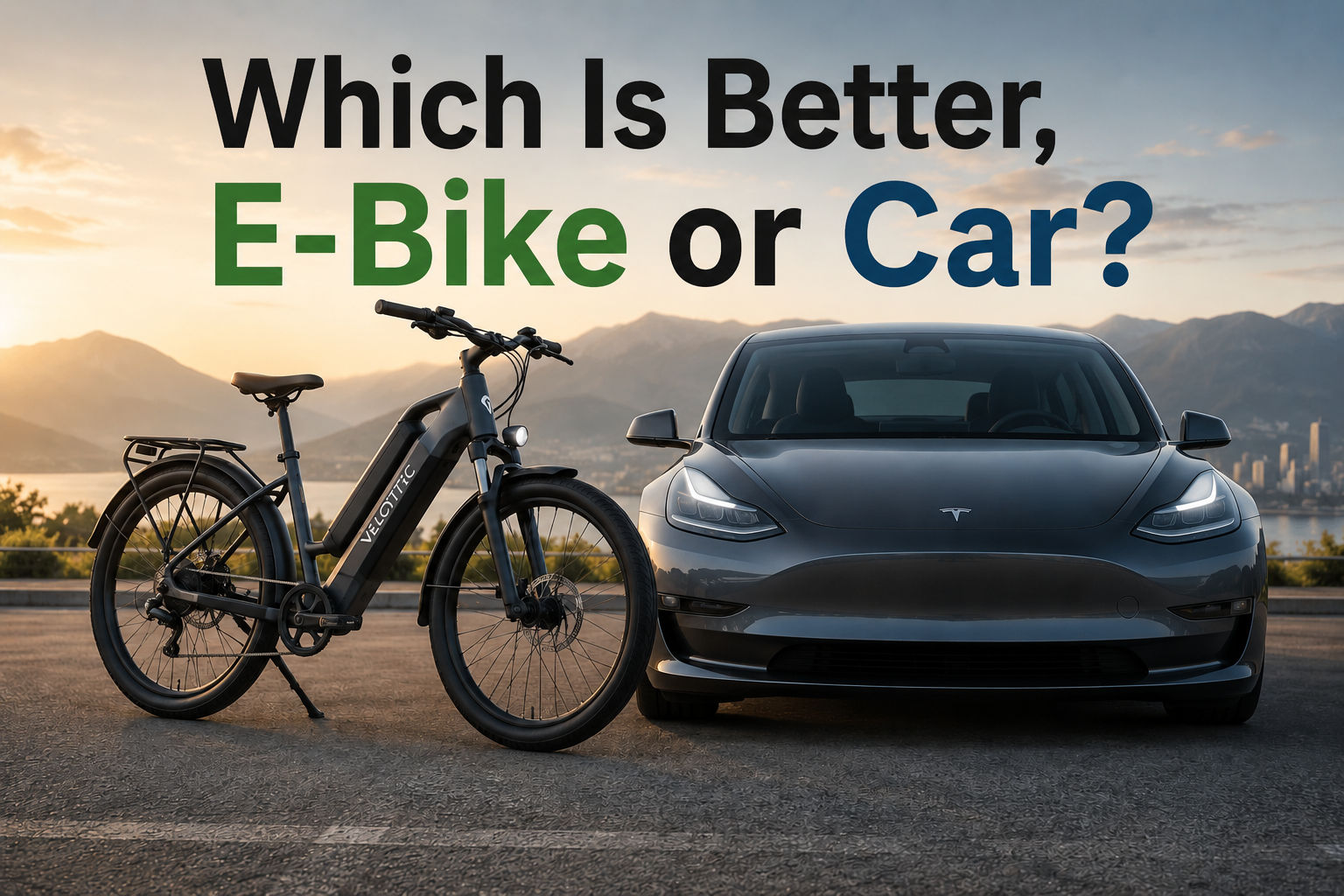
Introduction
Choosing between an e-bike and a car has become one of the most common transportation decisions in recent years. Rising fuel prices, increasing traffic congestion, environmental concerns, and advances in electric mobility have encouraged many people to reconsider how they travel every day. While cars have long been the preferred choice for convenience, comfort, and long-distance travel, e-bikes are quickly gaining popularity because of their affordability, efficiency, and eco-friendly nature.
The question is no longer whether e-bikes are useful, but whether they can replace a car for everyday transportation. The answer depends on several factors, including your daily commute, budget, lifestyle, travel requirements, and personal preferences. For some people, an e-bike can significantly reduce transportation expenses while providing a healthy and enjoyable riding experience. For others, a car remains essential due to family responsibilities, weather conditions, or long-distance travel needs.
In this comprehensive guide, we will compare e-bikes and cars across multiple categories, including cost, convenience, maintenance, environmental impact, safety, comfort, and practicality. By the end of this article, you will have a clear understanding of which option is better suited to your specific needs.
Understanding What an E-Bike Is
An electric bike, commonly known as an e-bike, is a bicycle equipped with an electric motor and rechargeable battery that assists the rider while pedaling. Unlike traditional bicycles, e-bikes make riding easier by reducing physical effort, especially when climbing hills or traveling longer distances.
Modern e-bikes come in various styles designed for commuting, mountain riding, cargo transport, and recreational use. Most e-bikes allow riders to choose different levels of pedal assistance, making them suitable for both beginners and experienced cyclists. Depending on the battery capacity and terrain, many e-bikes can travel between 30 and 100 kilometers on a single charge.
The increasing popularity of e-bikes is largely driven by their ability to combine convenience, affordability, and sustainability. They provide a practical transportation solution for urban commuters who want to avoid traffic while reducing transportation costs.

Understanding the Role of Cars in Daily Transportation
Cars have been the primary mode of transportation for decades because they offer flexibility, comfort, and independence. Whether commuting to work, running errands, transporting family members, or traveling long distances, cars provide a level of convenience that few transportation options can match.
Modern vehicles are equipped with advanced safety features, climate control systems, entertainment technology, and comfortable seating arrangements. They can carry multiple passengers and transport large amounts of cargo, making them particularly useful for families and businesses.
Despite these advantages, owning a car involves substantial expenses, including fuel, insurance, registration, maintenance, and parking costs. Traffic congestion and environmental concerns have also encouraged many people to explore alternatives such as e-bikes.

Cost Comparison: E-Bike vs Car
Initial Purchase Cost
One of the biggest differences between an e-bike and a car is the upfront purchase price.
A quality e-bike typically costs between $800 and $4,000, depending on the brand, battery capacity, and features. Premium models may cost more, but they remain significantly cheaper than most cars.
In comparison, even an affordable new car often costs between $20,000 and $35,000. Luxury vehicles can exceed $50,000 or even $100,000. This makes the financial barrier to owning a car substantially higher than purchasing an e-bike.
For budget-conscious consumers, the lower initial investment required for an e-bike can be a major advantage.
Fuel and Energy Costs
Fuel expenses represent one of the largest ongoing costs associated with car ownership. Depending on fuel prices and driving habits, many car owners spend hundreds or thousands of dollars annually on gasoline.
E-bikes, however, require only electricity to charge their batteries. A full battery charge often costs just a few cents and can provide dozens of kilometers of travel. Over the course of a year, energy costs for an e-bike are dramatically lower than fuel expenses for a car.
For individuals seeking long-term savings, e-bikes offer a clear financial advantage.
Maintenance Costs
Cars contain thousands of mechanical components that require regular servicing. Oil changes, brake repairs, tire replacements, engine maintenance, and unexpected repairs can quickly become expensive.
E-bikes have a much simpler design. Maintenance typically includes tire replacements, brake adjustments, chain lubrication, and occasional battery replacement after several years of use.
As a result, annual maintenance expenses for an e-bike are usually much lower than those associated with car ownership.
Environmental Impact
Why E-Bikes Are More Eco-Friendly
Environmental sustainability has become an increasingly important factor in transportation decisions. E-bikes produce no direct emissions during operation and consume significantly less energy than cars.
Because they require smaller batteries and less manufacturing material than electric cars, their overall environmental footprint is also lower. Using an e-bike instead of a car for short trips can contribute to reduced air pollution and lower carbon emissions.
The Environmental Cost of Cars
Traditional gasoline-powered vehicles contribute substantially to greenhouse gas emissions. Even electric cars require large batteries and significant resources during production.
While modern cars are becoming more efficient, they generally have a greater environmental impact than e-bikes due to their size, weight, and energy consumption.
Convenience and Daily Commuting
Advantages of Using an E-Bike for Commuting
For urban commuters, e-bikes offer several practical benefits. Riders can often bypass traffic congestion, use bike lanes, and avoid parking challenges. Travel times in crowded city centers can sometimes be shorter on an e-bike than in a car.
Additionally, e-bikes provide flexibility for short and medium-distance trips without the hassle of finding parking spaces.
Advantages of Using a Car for Commuting
Cars excel in situations involving long distances, extreme weather conditions, or transporting passengers and cargo. They provide protection from rain, snow, heat, and cold while offering a comfortable environment during travel.
For individuals who regularly travel long distances or commute in areas without cycling infrastructure, a car may remain the more practical choice.
Comfort and Travel Experience
Comfort is a subjective factor that varies depending on individual preferences. Cars provide climate control, comfortable seating, entertainment systems, and protection from environmental conditions.
E-bikes, on the other hand, offer an open-air experience that many riders find enjoyable and refreshing. Riders can interact with their surroundings and enjoy a more active commute.
For short urban trips, many users find e-bikes highly enjoyable. For extended journeys, cars generally provide superior comfort.
Health Benefits
How E-Bikes Improve Physical Fitness
Unlike cars, e-bikes encourage physical activity. Although the electric motor provides assistance, riders still engage muscles and burn calories while traveling.
Research suggests that regular e-bike use can improve cardiovascular health, increase physical activity levels, and support weight management. For individuals looking to combine transportation with exercise, e-bikes offer a unique advantage.

Safety Considerations
Safety of E-Bikes
E-bike riders are more exposed to road conditions and weather. Safety largely depends on rider behavior, protective gear, and local cycling infrastructure.
Wearing helmets, using lights, and following traffic laws can significantly improve safety.
Safety of Cars
Cars provide protective structures, airbags, seat belts, and advanced driver-assistance systems. These features offer greater protection during accidents.
However, cars are also involved in a large number of traffic incidents each year, making responsible driving essential.
Parking and Storage
Parking is often one of the most frustrating aspects of car ownership. Urban areas frequently have limited parking availability and expensive parking fees.
E-bikes require minimal storage space and can often be parked near destinations or stored indoors. This convenience can save both time and money.
Which Option Is Better for Different Types of Users?
Best Choice for Students
Students often benefit from e-bikes because they are affordable, economical, and easy to maintain.
Best Choice for Office Workers
Urban office workers with moderate commuting distances may find e-bikes highly practical.
Best Choice for Families
Families generally benefit more from cars due to passenger capacity and cargo space.
Best Choice for Long-Distance Travelers
Cars remain the preferred option for long-distance transportation.
Best Choice for Environmentally Conscious Individuals
E-bikes are often the superior choice for reducing environmental impact.

E-Bike vs Car: Quick Comparison Table
| Factor | E-Bike | Car |
|---|---|---|
| Purchase Cost | Lower | Higher |
| Fuel Cost | Very Low | High |
| Maintenance | Low | High |
| Environmental Impact | Excellent | Moderate to High |
| Parking | Easy | Difficult |
| Weather Protection | Limited | Excellent |
| Passenger Capacity | Low | High |
| Long-Distance Travel | Limited | Excellent |
| Health Benefits | High | Low |
Final Verdict: Which Is Better, E-Bike or Car?
The answer ultimately depends on your lifestyle and transportation needs. If your primary goal is saving money, reducing environmental impact, avoiding traffic, and staying active, an e-bike is often the better choice. It offers remarkable efficiency for urban commuting and short-distance travel while costing significantly less than owning a car.
However, if you frequently travel long distances, transport family members, carry large loads, or require protection from varying weather conditions, a car remains the more practical option. Cars provide unmatched convenience, comfort, and versatility that e-bikes cannot fully replace.
For many people, the ideal solution is not choosing one over the other but using both strategically. An e-bike can handle daily commuting and local errands, while a car can be reserved for long trips and situations where additional space and comfort are necessary.
In the end, the better option is the one that aligns most closely with your budget, lifestyle, commuting habits, and long-term transportation goals