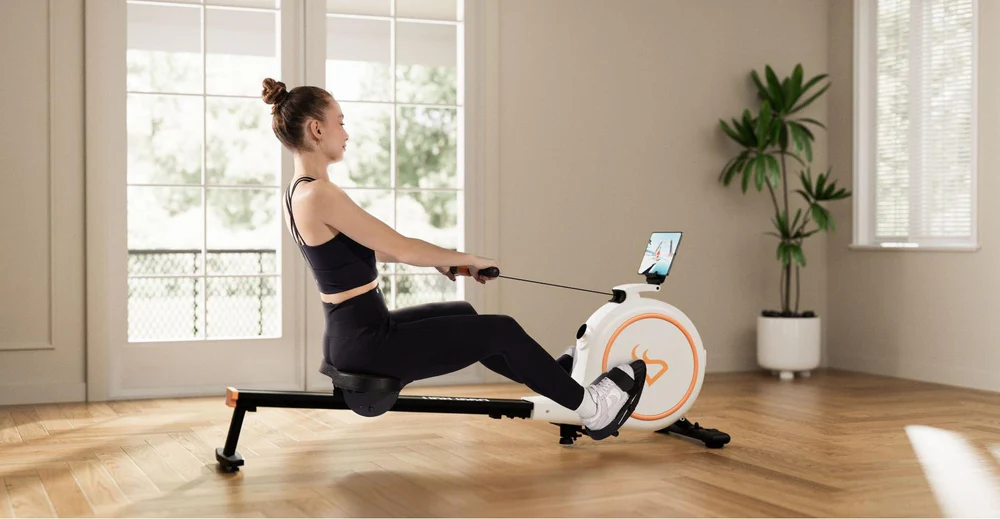
10 Benefits of a Rowing Machine: The Ultimate Full-Body Workout for Fitness and Weight Loss
When it comes to home fitness equipment, treadmills and exercise bikes often steal the spotlight. However, rowing machines have quietly become one of the most effective workout tools available today. Whether your goal is weight loss, muscle toning, improved endurance, or better cardiovascular health, a rowing machine can help you achieve it all from a single piece of equipment.
Unlike many traditional cardio machines that focus primarily on the lower body, rowing engages nearly every major muscle group at the same time. It combines cardiovascular training with strength-building movements, creating a workout that is both efficient and highly effective.
The growing popularity of rowing machines isn't just a fitness trend. Athletes, personal trainers, and health experts consistently recommend rowing because of its versatility and ability to deliver impressive results with minimal impact on the joints.
In this guide, we'll explore the top 10 benefits of a rowing machine and explain why it deserves a place in your fitness routine.
1. Provides a True Full-Body Workout
One of the biggest advantages of rowing is that it works almost every major muscle group in your body.
Each rowing stroke consists of four phases: the catch, drive, finish, and recovery. During these movements, your legs generate power, your core provides stability, and your arms and back complete the pulling motion.

A properly executed rowing stroke engages:
- Quadriceps
- Hamstrings
- Glutes
- Calves
- Core muscles
- Upper back
- Shoulders
- Biceps
- Forearms
Research suggests that nearly 85% of the body's muscles are activated during rowing. This makes it one of the few cardio exercises that also delivers meaningful strength-training benefits.
Instead of isolating specific muscle groups, rowing trains your body to work as a complete unit, improving both strength and coordination.
2. Burns Calories and Supports Weight Loss
For individuals looking to lose weight, rowing is one of the most efficient calorie-burning exercises available.
The number of calories burned depends on factors such as body weight, workout intensity, and duration. However, a vigorous rowing session can burn between 500 and 800 calories per hour.
Because rowing combines resistance training with cardiovascular exercise, your body continues to burn calories even after your workout ends. This effect, often called the "afterburn effect," helps increase overall calorie expenditure.

Unlike some forms of exercise that only focus on calorie burning, rowing also helps preserve and build lean muscle mass. Maintaining muscle is important during weight loss because muscle tissue naturally burns more calories than fat.
As a result, rowing supports sustainable fat loss while helping you maintain a strong and healthy physique.
3. Improves Heart Health and Cardiovascular Fitness
A healthy heart is essential for overall well-being, and rowing provides an excellent cardiovascular workout.
As you row, your heart rate increases and your body works harder to deliver oxygen-rich blood to your muscles. Over time, this strengthens your cardiovascular system and improves endurance.
Regular rowing workouts can help:
- Improve circulation
- Lower resting heart rate
- Reduce blood pressure
- Increase lung capacity
- Enhance oxygen efficiency
People who consistently perform aerobic exercises such as rowing often experience better energy levels throughout the day and reduced risk of heart disease.

Even moderate rowing sessions several times per week can significantly improve cardiovascular fitness over time.
4. Gentle on Joints and Low Impact
Many people struggle with traditional cardio exercises because they place excessive stress on the joints.
Running, jumping, and high-impact sports can sometimes lead to discomfort in the knees, hips, ankles, or lower back. Rowing offers an excellent alternative.
Because your feet remain planted on the footrests throughout the workout, rowing minimizes impact while still delivering a challenging exercise session.
The smooth gliding motion reduces stress on:
- Knees
- Ankles
- Hips
- Lower back
This makes rowing suitable for older adults, beginners, individuals recovering from injuries, and anyone seeking a safer workout option.
Low-impact does not mean low-intensity. Rowing allows you to push yourself physically without placing unnecessary strain on your joints.
5. Builds Strength and Muscle Endurance
While many people think of rowing primarily as cardio, it is also an excellent strength-building exercise.
Each rowing stroke requires resistance against the machine, helping strengthen muscles throughout the body. The repeated pulling and pushing actions create muscular endurance while also improving overall strength.
Some of the primary muscles developed through rowing include:
- Latissimus dorsi (back muscles)
- Glutes
- Hamstrings
- Quadriceps
- Shoulders
- Biceps
Over time, consistent rowing can lead to increased muscle tone, improved posture, and greater physical performance in everyday activities.
The ability to simultaneously build strength and endurance makes rowing unique compared to many other forms of exercise.
6. Strengthens the Core
A strong core is about much more than visible abs.
Your core muscles play a crucial role in maintaining posture, balance, and stability during everyday movements. Every rowing stroke requires continuous core engagement to maintain proper body positioning.
During rowing, the following muscles work together:
- Rectus abdominis
- Obliques
- Transverse abdominis
- Lower back muscles
This constant activation strengthens the entire midsection without requiring traditional abdominal exercises.
A stronger core can help reduce lower back pain, improve athletic performance, and support better posture throughout the day.
For office workers who spend long hours sitting, rowing can be especially beneficial in combating core weakness and postural issues.
7. Saves Time While Delivering Excellent Results
Modern lifestyles often leave little time for lengthy workouts.
One of the most appealing benefits of rowing is its efficiency. A short rowing session can provide both cardiovascular and strength-training benefits simultaneously.
Instead of spending:
- 30 minutes on a treadmill
- 20 minutes lifting weights
- Additional time doing core exercises
You can combine all of these benefits into a single rowing workout.
Many fitness experts recommend 20–30 minutes of rowing for a highly effective full-body session. High-intensity interval rowing workouts can produce remarkable results in even less time.
For busy professionals, students, and parents, rowing offers maximum results with minimal time investment.
8. Supports Mental Health and Stress Relief
Exercise is one of the most effective natural methods for improving mental well-being, and rowing is no exception.
The repetitive and rhythmic nature of rowing creates a meditative effect that helps calm the mind and reduce stress.
During exercise, the body releases endorphins, which are often referred to as "feel-good hormones." These chemicals help:
- Improve mood
- Reduce anxiety
- Lower stress levels
- Increase mental clarity
- Boost self-confidence
Many people find rowing particularly enjoyable because it allows them to focus on rhythm, breathing, and movement rather than daily worries.
Regular rowing workouts can contribute to improved emotional well-being and better overall quality of life.
9. Improves Flexibility and Mobility
Maintaining flexibility becomes increasingly important as we age.
Rowing involves a wide range of motion that naturally stretches and mobilizes multiple areas of the body. Each stroke requires coordinated movement through the hips, knees, shoulders, and spine.
Over time, rowing can help:
- Improve hip mobility
- Increase hamstring flexibility
- Enhance shoulder movement
- Promote better posture
- Reduce muscle stiffness
For individuals who spend much of their day sitting at a desk, rowing can help counteract tight muscles and poor posture caused by prolonged inactivity.
Improved mobility not only supports athletic performance but also makes everyday activities easier and more comfortable.
10. Suitable for All Fitness Levels
One of the greatest strengths of rowing machines is their accessibility.
Whether you're a beginner starting your fitness journey or an experienced athlete training for performance, rowing can be adjusted to match your ability level.
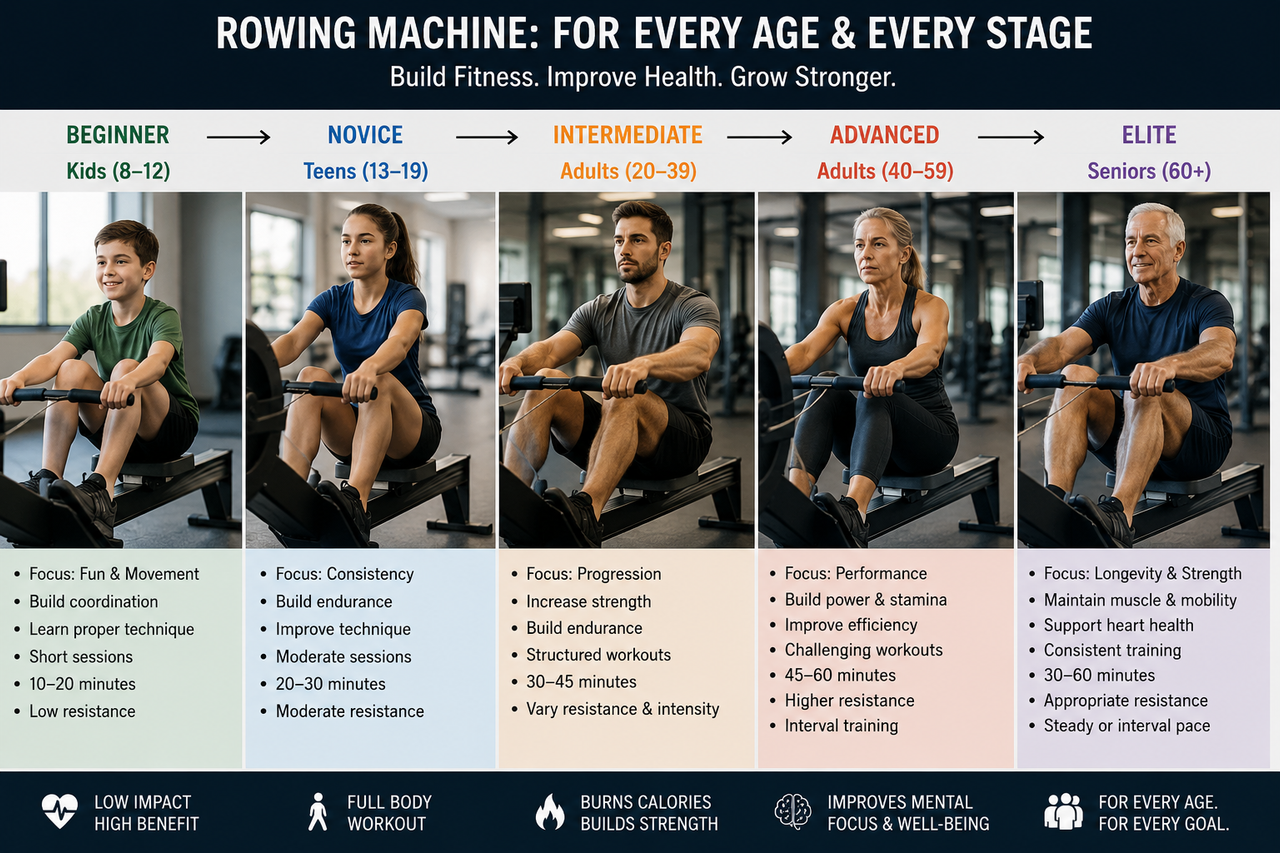
Most modern rowing machines offer adjustable resistance settings that allow users to customize workout intensity.
Beginners can focus on learning proper technique and building endurance, while advanced users can perform high-intensity intervals, endurance challenges, or strength-focused sessions.
Because rowing grows with your fitness level, it remains an effective exercise for years to come.
Bonus Benefit: Perfect for Home Workouts
Home fitness has become increasingly popular, and rowing machines are among the best investments for a home gym.
Compared to multiple pieces of equipment, a rowing machine provides a complete workout from a single machine.
Benefits for home users include:
- Space-saving designs
- Foldable storage options
- Quiet operation
- Adjustable resistance
- Suitable for all family members
Whether it's raining outside or you simply prefer exercising at home, a rowing machine allows you to maintain consistency without needing a gym membership.
How Often Should You Use a Rowing Machine?
For general fitness, most experts recommend rowing three to five times per week.
A typical weekly routine might include:
- 20–30 minutes for beginners
- 30–45 minutes for intermediate users
- High-intensity intervals for advanced athletes
Consistency is more important than intensity. Even moderate rowing sessions performed regularly can produce significant health and fitness improvements over time.
Final Thoughts
A rowing machine is far more than just another cardio machine. It offers a unique combination of full-body strength training, cardiovascular conditioning, calorie burning, and low-impact movement that few other pieces of equipment can match.
Whether your goal is weight loss, improved endurance, stronger muscles, better heart health, or enhanced mental well-being, rowing provides an effective and sustainable solution.
Its ability to engage nearly every muscle group while remaining gentle on the joints makes it suitable for people of all ages and fitness levels. By incorporating rowing into your weekly fitness routine, you can enjoy a challenging, rewarding, and highly efficient workout that supports long-term health and wellness.