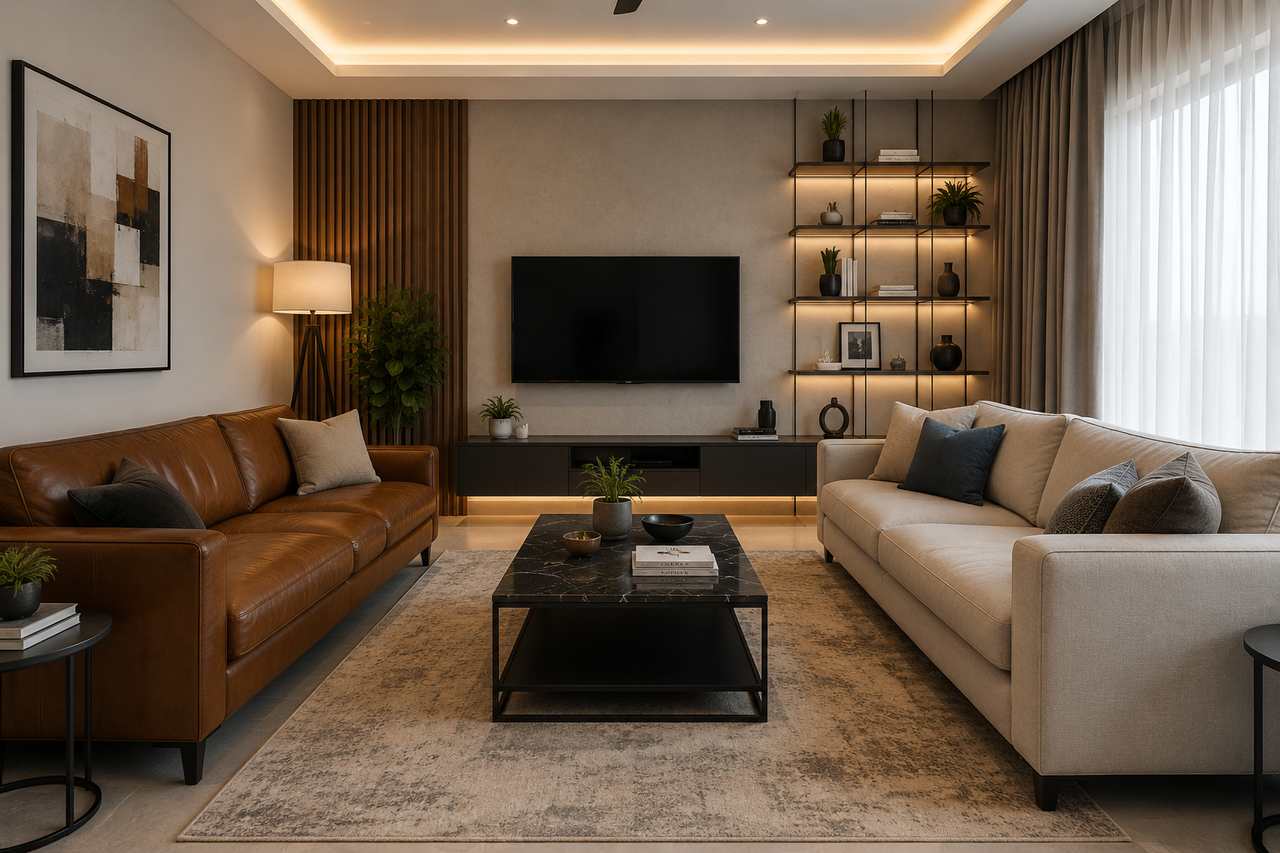
Quick Answer
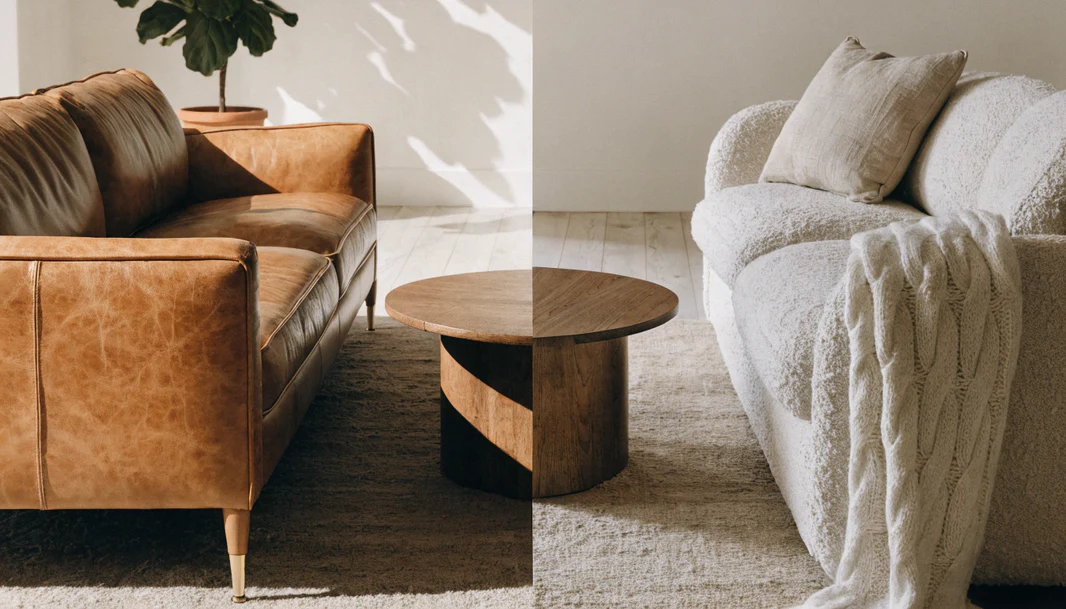
- Choose leather if: you want a surface that wipes clean in seconds, you have dogs, and you want the option that typically lasts the longest with the least ongoing effort.
- Choose fabric if: you want a softer, cozier feel from day one, more color and pattern options, and you don't mind a bit more regular maintenance.
- Choose performance fabric if: you want fabric's comfort with much better stain resistance a strong middle-ground option for busy households.
Leather vs Fabric: Side-by-Side Comparison
| Factor | Leather Sofa | Fabric Sofa |
| Durability | Top-grain lasts 15-20 years |
Standard fabric lasts 5-8 years |
| Cleaning spills | Wipes off in seconds |
Needs blotting, then spot treatment |
| Dog hair | Sits on top, dusts off easily |
Works into fibers, harder to remove |
| Cat scratches | Shows punctures and marks | Tight weaves resist better |
| Comfort | Cool at first, firmer seat |
Soft immediately, cozy year-round |
| Color options | Limited (browns, blacks, neutrals) | Nearly unlimited |
| Upfront cost | Higher |
More budget-friendly options |
| Ongoing maintenance | Wipe + occasional conditioning |
Regular vacuuming, spot cleaning |
| Dust/allergen buildup | Wipes away easily | Traps more dust in fibers |
Which Lasts Longer: Leather or Fabric?
-
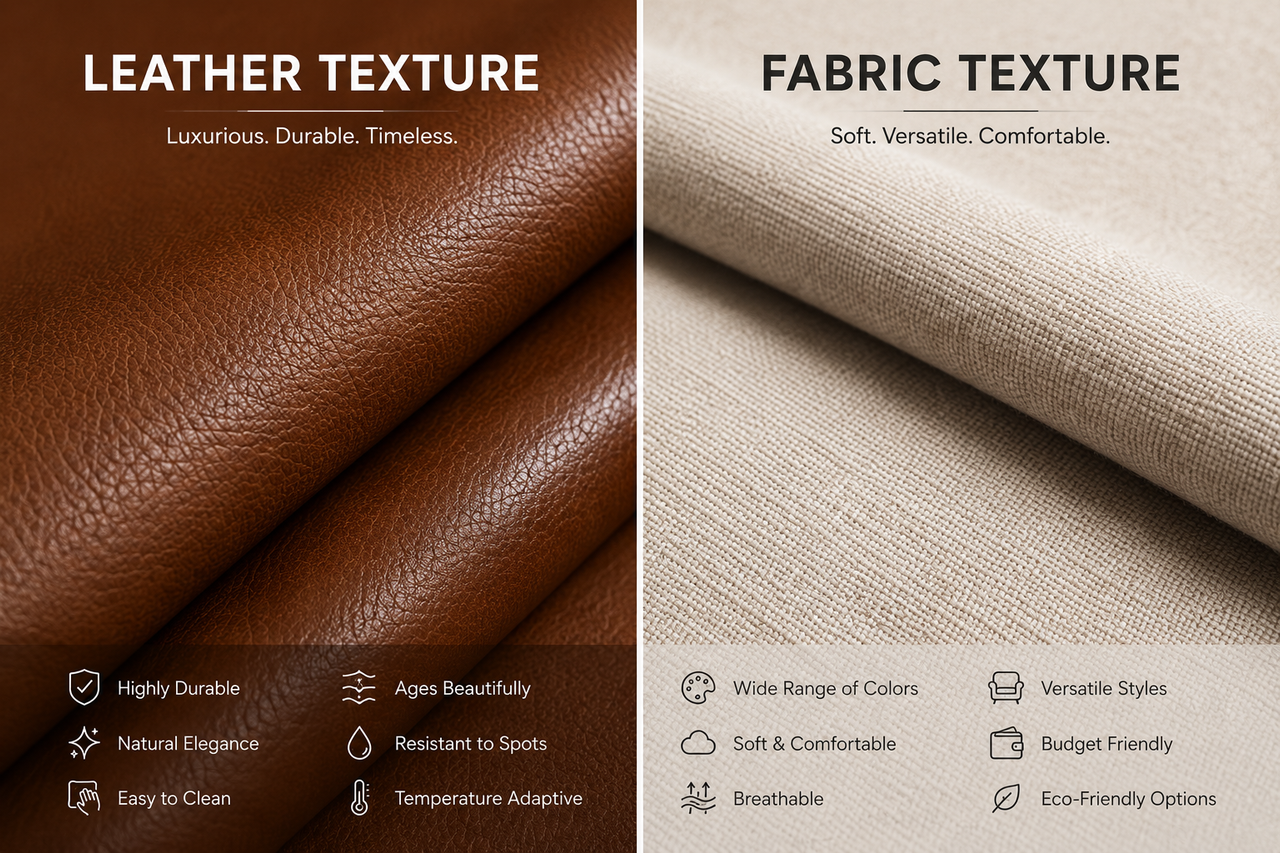
High-quality leather typically wins. Top-grain and full-grain leather can last 15 years or more, and unlike fabric, it actually looks better with age developing a soft patina rather than visible wear. The catch is that this only applies to genuine, higher-grade leather.
- Cheap leather can fail faster than good fabric. Bonded leather (a lower-grade material made from scraps bonded together) commonly peels or cracks within a year or two. If a leather sofa's price seems too good to be true, it usually is and it won't outlast a quality fabric alternative.
- Performance fabric closes much of the gap. Modern performance fabrics, built with tight weaves and stain-resistant treatments, hold up significantly better than older cotton or linen blends. Removable, washable covers extend a fabric sofa's usable life even further. Upholstery durability is often measured using the Martindale rub test for a busy household, look for a high rub count when comparing fabric options.
The real lesson: the specific quality tier matters more than the material category itself. A cheap version of either material will disappoint; a good version of either can last many years.
Best Choice for Families With Kids and Pets
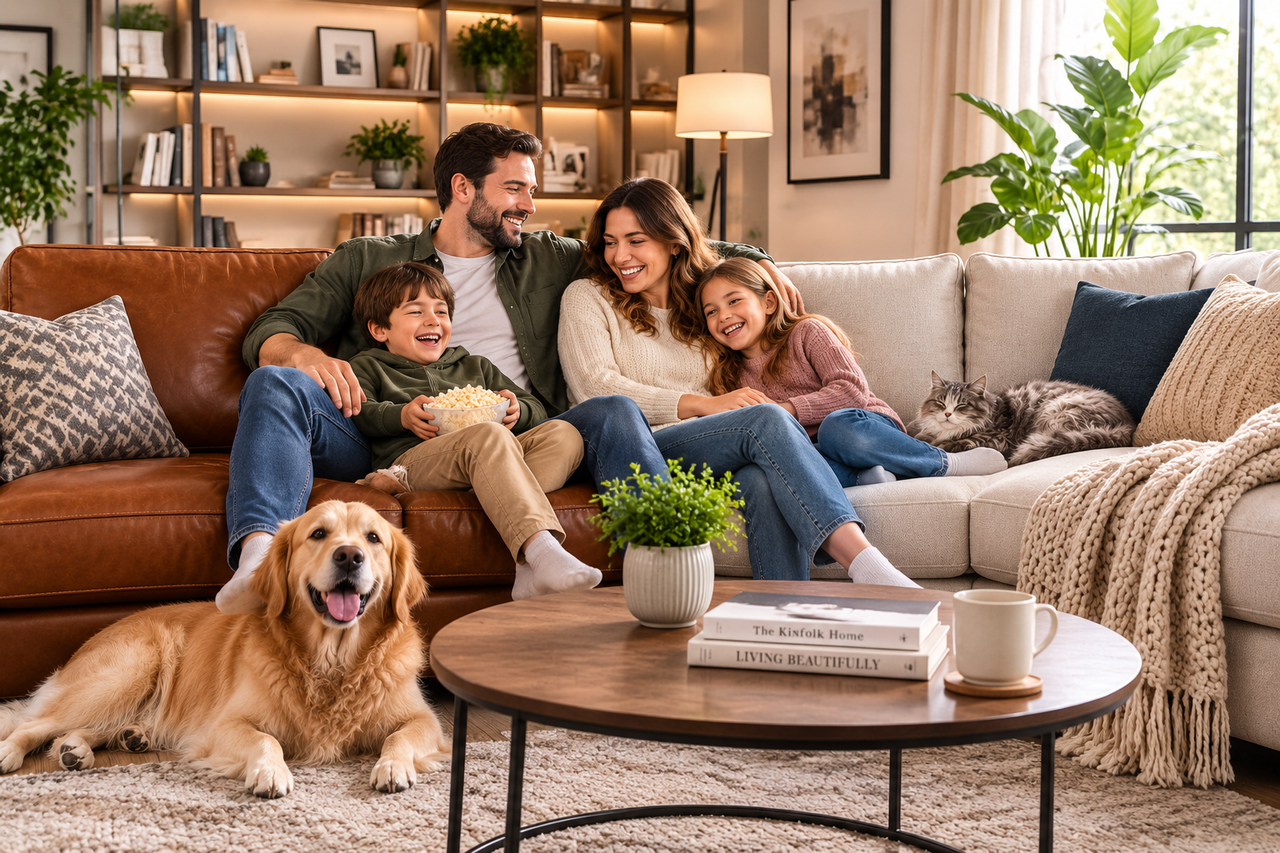
This is usually the deciding factor for most households, so it's worth breaking down by specific situation:
- Best for spills (juice, food, drinks): Leather. Liquids sit on the surface rather than soaking in, so a quick wipe usually handles it completely.
- Best for dog hair: Leather. Hair sits on top of the smooth surface and dusts or vacuums off easily, rather than working into fibers.
- Best for cats: Tight-weave performance fabric or microfiber. Leather shows every scratch mark permanently, while a tight weave resists snagging much better. Avoid loose-weave or looped fabrics entirely if you have a cat.
- Best for messy, high-traffic family rooms: Either leather (for wipe-clean convenience) or washable-cover performance fabric (for deeper, more thorough cleaning when needed).
Cleaning and Maintenance
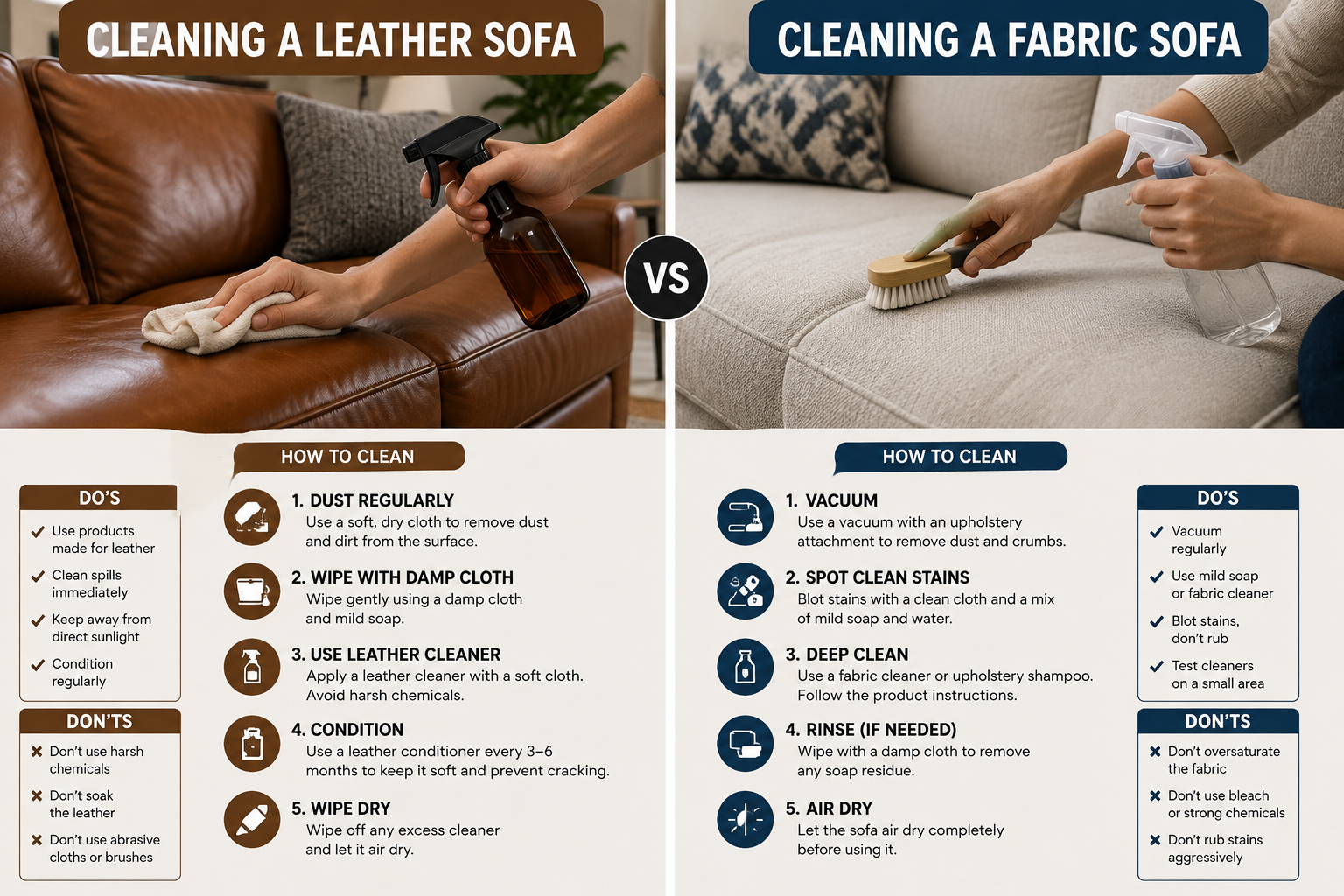
- Leather: Dust weekly, wipe spills immediately, and condition occasionally to prevent drying and cracking. Keep it out of direct, prolonged sunlight, and avoid harsh chemical cleaners.
- Fabric: Requires more routine attention regular vacuuming, prompt blotting of spills, and a fabric-safe cleaner for stains. Removable covers, where available, can go straight into the wash for deeper cleaning.
For everyday mess, leather generally requires less ongoing effort. Fabric asks for more consistent maintenance, though performance fabrics and washable covers narrow that gap considerably.
Comfort: Which Feels Better Day to Day?
- Leather feels cool to the touch initially (warming quickly with body contact) and offers a firmer, more structured seat a plus if you prefer more back support rather than sinking in.
- Fabric feels soft immediately, with no temperature adjustment period, and is generally the more popular choice for long lounging sessions, movie nights, and naps. It also opens up a much wider range of textures (velvet, chenille, boucle, linen) that leather simply can't offer.
Cost and Long-Term Value
- Leather typically costs more upfront, reflecting it as a premium material but cheap leather isn't automatically better value just because it's still technically leather; a low-grade option can wear out faster than a well-made fabric sofa costing less.
- Fabric offers considerably more options at lower price points, and it's easier to update or replace as your style preferences change over time. Ultimately, long-term value on either material depends more on overall build quality frame, foam density, and stitching than on the upholstery material alone.
Allergies and Indoor Air Considerations
If allergies are a concern in your household, leather has a practical advantage: its smooth surface doesn't trap dust, dander, or hair the way fabric fibers can, making regular cleaning more effective. Fabric can hold onto dust, pet dander, and odors more readily, though tightly woven fabrics and washable covers meaningfully reduce this compared to loose-weave options.
Worth noting for either material: new furniture can off-gas volatile organic compounds (VOCs) for a period after purchase. Good ventilation in the days after a new sofa arrives is a simple, practical step regardless of which material you choose.
When Leather Might Not Be the Right Choice
- You have a cat prone to scratching the marks are permanent and highly visible.
- Your living room gets hours of strong, direct sunlight, which can fade and dry out leather over time without regular conditioning.
- You specifically want a plush, sink-in feel rather than a firmer, more structured seat.
When Fabric Might Not Be the Right Choice
- You strongly dislike frequent vacuuming, since dust and crumbs settle into the fibers faster than on a smooth surface.
- You or your family frequently eat on the sofa, since oil-based food stains can work into fabric fibers over time.
- You want the longest possible lifespan with the least ongoing maintenance effort.
Frequently Asked Questions
Is leather or fabric better for a family with young kids?
It depends on your bigger concern. For spill cleanup, leather is generally easier and faster. For overall softness and a cozier feel for family movie nights, fabric especially performance fabric tends to be the more popular choice. Many families find a washable-cover performance fabric offers the best balance of both.
Does leather really last longer than fabric?
High-quality top-grain or full-grain leather typically outlasts standard fabric, often by a decade or more. However, low-grade bonded leather can fail faster than a well-made fabric sofa, so the specific quality tier matters more than the material category.
What's the best sofa material if I have both a dog and a cat?
This is a genuine trade-off: leather handles dog hair very well but shows cat scratches permanently. A tight-weave performance fabric is usually the safer middle-ground choice if you have both, since it resists cat claws reasonably well while still handling everyday mess.
Is fabric or leather better for allergies?
Leather generally has the edge here, since its smooth surface doesn't trap dust and dander the way fabric fibers can. If you prefer fabric for comfort reasons, choosing a tightly woven fabric with a washable cover helps close this gap.
The Bottom Line
Neither material is objectively "better" the right choice depends on your household's actual daily life. Lean toward leather if you want long-term durability, easy spill cleanup, and you have dogs rather than cats. Lean toward fabric if softness and cozy comfort matter more to you, and you're comfortable with more regular maintenance. If you want a genuine middle ground, a quality performance fabric with a washable cover offers much of fabric's comfort with meaningfully better stain and wear resistance a solid choice for most busy family homes.